The short answer
Most buy-to-let lenders want a 25% deposit, meaning a 75% loan to value. Some go to 80%, and a few to 85%, usually at higher rates. But the rent must also pass the lender's stress test, and on a low rent that can mean putting down more than 25%.
Deposit levels
- 25% (75% LTV): the standard, with the widest choice of lenders and rates.
- 20% (80% LTV): available from a number of lenders, usually at a higher rate.
- 15% (85% LTV): rare and specialist. Expect strict criteria.
- 40% or more: often unlocks the lowest rates.
When the rent forces a bigger deposit
Lenders work out the maximum loan from the rent. A common test is that rent must cover the interest by 125% (companies and basic-rate taxpayers) or 145% (many higher-rate taxpayers) at a stress rate, often around 5.5%.
A worked example
You are buying a £120,000 terrace. A 25% deposit is £30,000, so you want to borrow £90,000.
- Rent £750 a month: the 125% test supports up to £130,909 and the 145% test up to £112,853. The £90,000 loan passes either way.
- Rent £550 a month: the 125% test supports up to £96,000, which still works. The 145% test supports only £82,759, so a higher-rate taxpayer would need a deposit of about £37,241 (31%).
Options if the rent falls short: a five-year fix tested at the actual rate, buying through a limited company at 125%, or a lender that tops up the rent test with personal income. Run your own figures in the deal analyser.
The costs on top of the deposit
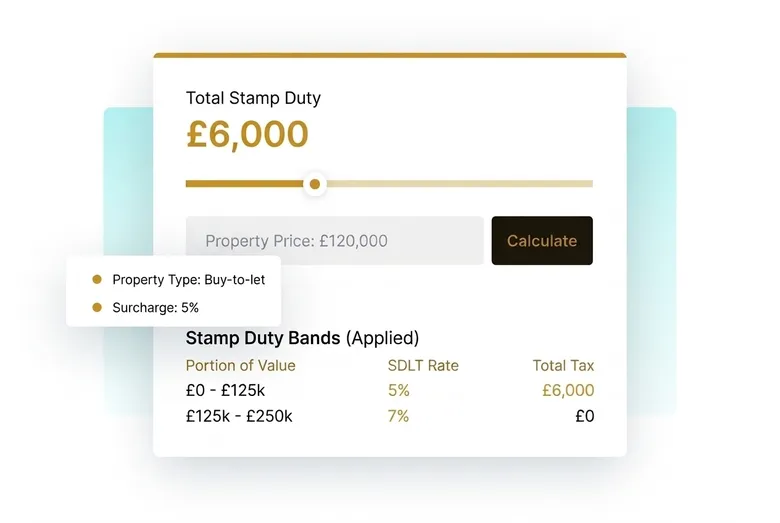
- Stamp duty. Buy-to-let purchases pay the higher rates. On £120,000 that is £6,000 in England. Check the stamp duty calculator.
- Mortgage fees, often £999 to £1,999 or a percentage of the loan.
- Legal fees, survey and searches.
- A cash buffer for repairs and empty months. Many landlords keep at least three months of costs.
Where can the deposit come from?
Savings, equity released from another property, or a gift. Lenders will want proof of where the money came from. Releasing equity from another buy-to-let is common: see buy-to-let remortgage.
Is it regulated?
A buy-to-let mortgage for an investment property is usually not regulated, so we can talk to you about it. If the deposit comes from borrowing secured on your own home, that part is regulated and we cannot help with it yet.
Common questions
Can I get a buy-to-let mortgage with a 10% deposit?
It is very rare. The lowest deposits most lenders accept are 15% to 20%, and only on strong cases.
Is the deposit different for a limited company?
Usually the same, 20% to 25%. The 125% rental test for companies can mean you borrow more on the same rent.
Can I use a gifted deposit for buy to let?
Some lenders allow it, usually from a close family member with a signed gift letter. Others do not, so check before you rely on it.